
Article type: Conference Report
2 July 2026
Volume 48 Suppl.1
HISTORY
RECEIVED: 28 April 2026
Article type: Conference Report
2 July 2026
Volume 48 Suppl.1
HISTORY
RECEIVED: 28 April 2026
![]() ‘I Am Me’: Early childhood violence prevention through body safety and gender equality education
‘I Am Me’: Early childhood violence prevention through body safety and gender equality education
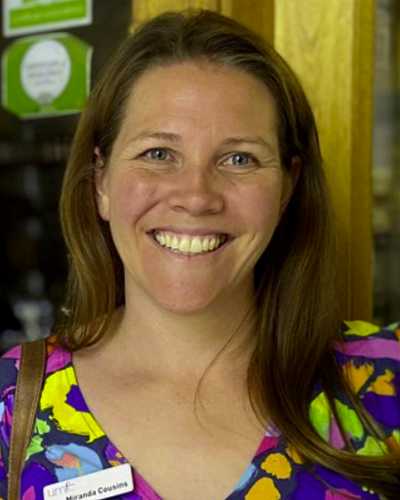
Miranda Cousins1 Senior Practitioner *
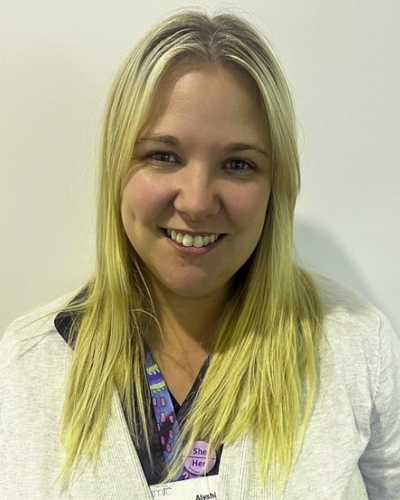
Alyshia Klein1 Family Service Practitioner
Affiliations
1 Family Violence Child Safety Team, Child & Family Specialised Programs, Upper Murray Family Care, Wodonga, Vic. 3690, Australia
Correspondence
* Miranda Cousins
Contributions
Miranda Cousins - Drafting of manuscript, Critical revision
Alyshia Klein - Drafting of manuscript, Critical revision
Miranda Cousins1 *
Alyshia Klein1
Affiliations
1 Family Violence Child Safety Team, Child & Family Specialised Programs, Upper Murray Family Care, Wodonga, Vic. 3690, Australia
Correspondence
* Miranda Cousins
CITATION: Cousins, M., & Klein, A. (2026). ‘I Am Me’: Early childhood violence prevention through body safety and gender equality education. Children Australia, 48(Suppl.1), 3118. doi.org/10.61605/cha_3118
© 2026 Cousins, M., & Klein, A. This work is licensed under the terms of a Creative Commons Attribution 4.0 International Licence









Background/Issue
Upper Murray Family Care (UMFC) is a Community Services Organisation supporting the communities across north-eastern Victoria and into southern New South Wales. The Family Violence Child Safety Team, part of UMFC’s Child and Family Services, works to bring children at the forefront when looking at family violence.
Our work spans three areas. First, direct support to children and families through a consultative process with Family Services. Second, training and education including delivery of training on the Safe & Together Model and supporting the model’s ongoing implementation. And third, a focus on prevention and community development activities, with the ‘I Am Me’ program being our major piece of work in this space.
The Family Violence Child Safety Team delivers services across seven local government areas – Mansfield, Benalla, Wangaratta, Alpine, Indigo, Wodonga and Towong. Within this region, there are more than 90 funded 4-year-old kindergarten programs, each with differing sizes, unique community contexts and levels of need.
In 2024, we started exploring a children’s program focused on body safety and gender equality. The work that we were doing on a daily basis, combined with statistics that showed reported family-violence incidents increased by 18.5% across the Ovens Murray region between 2018/19 and 2022/23, reinforced an already strongly held belief: we cannot wait until children are impacted by violence before talking with them about safety, respect and equality. Prevention has to begin early.
As we reviewed existing resources and programs, a clear and pressing gap emerged: the need for a free, accessible, sustainable and developmentally appropriate prevention program that could be delivered consistently across diverse kindergarten settings, regardless of location or size. The ‘I Am Me’ program was developed to fill this gap.
Action/Response
I Am Me is a family violence prevention program designed for children in 4-year-old kindergarten. It introduces body safety, gender equality and respectful relationships through playful, developmentally informed learning experiences.
Program structure
The program consists of four sessions.
Session 1 is a parent and educator session. This session provides information on the importance of teaching these topics in the early-years space, an introduction to programs content and information on practical ways families can reinforce these messages at home.
The next three sessions are delivered as weekly interactive 30-minute sessions with the children in the kindergarten. Each session is designed to capture the attention of young children through engaging and age-appropriate tools such as puppets, songs, illustrated storybooks and colourful visual aids.
To extend the program’s impact beyond the initial sessions, each kindergarten receives a resource pack containing storybooks, posters and visual prompts. These resources support educators to embed the messages into everyday learning environments and reinforce them consistently over time – an aspect that is crucial for lasting impact.
In addition, every child is provided with a take-home goodie bag, containing resources and activities for both children and parents. This supports learning at home and encourages ongoing family conversations about body safety, respect and equality.
Core concepts taught
- Emotional literacy and body signals: recognising emotions, identifying 'safe' and 'unsafe' feelings and understanding natural fight/flight/freeze responses.
-
Body safety:
- Body ownership and consent
- Anatomically correct names for body parts
- Necessary versus unnecessary touch
- Identifying safe adults
- The difference between secrets and surprises
- Gender equality: challenging stereotypes, promoting equal opportunities, valuing individual strengths, and celebrating uniqueness.
Reach and implementation
Since its creation, I Am Me has been delivered to nearly 30 kindergarten groups across the region. Recruitment occurs through existing partnerships, presentations at network meetings and direct outreach.
Lessons learned
Significant insights have shaped program refinement.
Flexibility is essential
Every kindergarten group is different; facilitators adapt sessions for attention spans, movement needs and engagement styles.
Puppets are powerful
Initially planned for one session, puppets now feature throughout, being the program’s strongest engagement tool. Their presence now threads through every session, improving attention, participation and emotional safety.
Hands-on activities beat posters
Interactive, sensory and movement-based activities consistently produced deeper engagement than static visuals. As a result, the program has shifted toward more hands-on experiences.
One-facilitator delivery is more sustainable
Although originally designed for two facilitators, we learned that a single-facilitator model is both feasible and necessary. It makes the program scalable without overburdening staff, who often have dual roles.
Educator involvement is critical
Sessions were significantly more successful when regular educators actively participated, supporting transitions, reinforcing expectations and modelling engagement. Clear communication prior to visits is now a routine part of the program.
Parent engagement needs fresh approaches
Attendance at live parent sessions was low. To improve accessibility and maintain program reach, we are developing video-based content for parents.
Feedback reflects strong impact
Consistent themes emerged from participant feedback.
- Resources: educators valued having high-quality materials without personal cost.
- Increased educator confidence: staff reported greater ability, language and comfort engaging children in conversations about safety and equality.
- Child engagement: children across diverse settings, including those with high rates of trauma exposure, were able to meaningfully participate.
- Parent knowledge: parents reported learning new ways to support body safety and gender equality at home and, in one case, a parent identified concerning behaviours after attending the session.
Conclusions
The early years provide a pivotal window to shape lifelong beliefs about respect, equality, consent and safety. I Am Me demonstrates that young children can – and do – engage deeply with these concepts when supported through play-based, sensitive, strengths-focused education.
By teaching equality, empathy and safety early, we hope to help build a future where children grow up in communities free from violence, where every child can say with confidence: I Am Me, and I am safe, valued and respected.