
Article type: Commentary
24 December 2025
Volume 47 Issue 2
HISTORY
RECEIVED: 18 December 2025
REVISED: 18 December 2025
ACCEPTED: 18 December 2025
Article type: Commentary
24 December 2025
Volume 47 Issue 2
HISTORY
RECEIVED: 18 December 2025
REVISED: 18 December 2025
ACCEPTED: 18 December 2025
![]() What will it take to make child safety, rights and wellbeing a priority in Australia?
What will it take to make child safety, rights and wellbeing a priority in Australia?
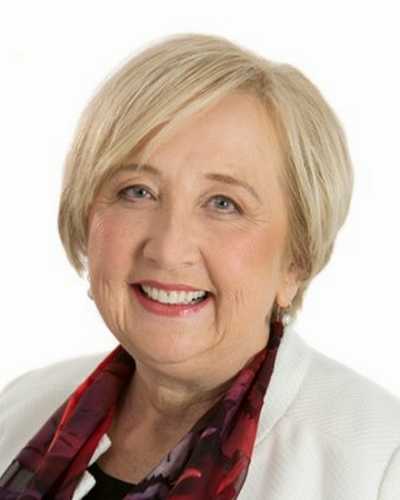
Anne Hollonds1,2 National Children’s Commissioner 2020–2025, CEO ELACCA *
Affiliations
1 Australian Human Rights Commission, Sydney, NSW, Australia
2 Present address: Early Learning & Care Council of Australia (ELACCA), Sydney, NSW, Australia
Correspondence
* Anne Hollonds
Contributions
Anne Hollonds - Drafting of manuscript, Critical revision
Anne Hollonds1,2 *
Affiliations
1 Australian Human Rights Commission, Sydney, NSW, Australia
2 Present address: Early Learning & Care Council of Australia (ELACCA), Sydney, NSW, Australia
Correspondence
* Anne Hollonds
CITATION: Hollonds, A. (2025). What will it take to make child safety, rights and wellbeing a priority in Australia? Children Australia, 47(2), 3106. doi.org/10.61605/cha_3106
© 2025 Hollonds, A. This work is licensed under the terms of a Creative Commons Attribution 4.0 International Licence









Keywords:
child rights, child safety, child wellbeing, evidence-based policy, youth justice.
In the article ‘Is child safety and wellbeing a priority in Australia?’, published in Children Australia in 2024, I argued that business as usual will not achieve the reforms needed to ensure the safety and wellbeing of children (Hollonds, 2024). National leadership and accountability for evidence-based action across the federation is required to address the unmet needs of children in vulnerable circumstances.
Since then, alarmingly, Australia has gone backwards on the human rights of children. For example, the Making Queensland Safer Act 2024 (Queensland Government, 2024a) legislated ‘adult time for adult crime’ measures, including longer prison sentences, and removed ‘detention as a last resort for children’. This Act represents a startling retreat from evidence and human rights, made more shocking by the fact that official government reports admit that the law is harsher on children than adults and will not protect children from ‘cruel, inhuman or degrading’ treatment. ‘The amendments are expected to have a greater impact on Aboriginal and Torres Strait Islander children, who are already disproportionately represented in the criminal justice system’ (Queensland Government, 2024b: p. 4).
Victoria’s new youth justice laws requiring children from 14 years of age to be treated as adults for serious offences, including life sentences, directly follow the lead of Queensland. The Northern Territory has retreated to pre-2016 NT Royal Commission days by bringing back spithoods, restraint chairs and lowering the age of criminal responsibility to 10 years of age.
Australia has been condemned internationally for our ‘flagrant breaches of human rights and international law’ (Chair, United Nations Committee on the Rights of the Child, 2024). The response of the Australian Government to these concerning developments: silence.
As Australia’s National Children’s Commissioner from 2020 to 2025, I observed that the way we do policy across the federation has led to our systems failing the safety, rights and wellbeing of children across numerous policy areas, despite the existence of a plethora of plans, strategies and frameworks in separate portfolios across Commonwealth, state and territory governments. The fragmentation from this siloed approach, and the historical ‘hands-off’ posture by the Commonwealth government, has produced service systems that are dominated by adults’ concerns, with children’s unmet needs sidelined or invisible.
These failures were highlighted in my report tabled in Parliament in August 2024: ‘Help Way Earlier!’ How Australia can transform child justice to improve safety and wellbeing’ (Australian Human Rights Commission, 2024). This was closely followed by the first Senate Inquiry into Australia’s Youth Justice and Incarceration System (Legal and Constitutional Affairs References Committee, 2025).
In 2025, we saw a relentless series of devastating revelations about preventable harm to babies and preschoolers, including child sexual abuse, in the early childhood education system. As almost daily media reports came out progressively during the year, we learnt the extent of the systems failures.
The complex mess of laws and policies, and the fragmented regulation of early childhood education across the country, has resulted in a shocking realisation that the adults are being protected, not the children in their care.
The 2015 recommendations from the Royal Commission into Institutional Responses to Child Sexual Abuse (Royal Commission into Institutional Responses to Child Sexual Abuse, 2015) remained on a shelf as ‘work in progress’ for a decade. These included nationally consistent working with children checks, and reportable conduct and information-sharing schemes that would have helped to keep children in the early childhood education system, and elsewhere, safer.
In response to the childcare sector crisis, some of these long-overdue child safety reforms are now being fast-tracked by governments, but 2025 has shone a harsh light on serious accountability gaps that need to be fixed.
This crisis is not an isolated mistake. Our services systems are primarily designed for the needs of adults or government administrations, not for the children in their care.
Until governments have the courage to identify the barriers to acting on evidence, and work to overcome these barriers, we will not make the progress we need to see on improved equity of outcomes and protection of human rights for Australia’s children.
Lack of knowledge is not our problem and there are decades of reports sitting on shelves. We know what to do.
So why did it take so long for governments to act on the evidence about child safeguarding?
Accountability for action was missing, or progress blocked by the fragmentation of responsibilities across the federation. And it seems that child safety and wellbeing was sidelined while governments prioritised other things.
The responses of governments across the federation to the child safety crisis in 2025 demonstrate that, in order to ‘get stuff done’, it takes strong Commonwealth government leadership and collaboration across the states and territories.
Child safety and wellbeing is a responsibility shared by all governments, and the Commonwealth government has a critical leadership role to play.
I think it’s important to have the courage to say out loud that there are significant barriers to acting on evidence of what will improve the lives of vulnerable children.
The people in Parliament are good people. Many of them are ‘champions for children’. But the truth is that MPs and government ministers face barriers to acting on the evidence. Barriers that are rarely discussed.
In Australia, we see the safety and wellbeing of children being hand-balled from one side of the jurisdictional divide to the other side, back and forth.
This is particularly the case with the overwhelmed child protection and youth justice systems, where the most egregious breaches of human rights are happening today.
The federation structure is used as a loophole, an excuse not to act to protect the human rights of Australia’s most vulnerable children. Despite decades of Royal Commissions and inquiries, and the many thousands of recommendations that have been repeated in these reports over time, our progress on implementation of the evidence has stalled (Stevens & Gahan, 2024).
The fact that adults’ concerns dominate policy attention has been demonstrated in numerous policy areas, including domestic, family and sexual violence, and in family law. When the Australian Child Maltreatment Study (ACMS) was first published (Scott & Mathews, 2023), it received very little media coverage or policy response in comparison with the significant policy and legislative work on adults’ issues, such as workplace sexual harassment.
Repeated promises to parents about ‘cheaper childcare’ now sound tone-deaf. In the past decade, governments should have been acting on the risks to children of rapid and poorly regulated expansion of early childhood education, based on the evidence. If child safety, rights and wellbeing had been a national priority, we would have heard promises for ‘safer childcare’.
The mechanisms for policy reform for children across the federation are not fit-for-purpose for the challenges we face today.
The question arising is: Why is Australia still unable to address the unmet needs of children in vulnerable circumstances? As a rich and smart country, not hampered by war or government corruption, what is our problem?
With the current Australian Government’s strong electoral mandate, and with far too many vulnerable children and young people being ‘left behind’ every day, this is a time of reckoning. It’s time to face up to the confronting truths about widespread systems failures and lack of action on the evidence.
While there are positive developments in Australia that we can applaud, the benefits of progress have not been equally shared, and too many children and families who most need help are still unable to get the help they need. We can’t sleep easy while that continues to happen in contemporary Australia.
For 5 years, I have been respectfully recommending that national leadership and co-ordination is required, including a Cabinet Minister for Children, and for child safety and wellbeing to be made a priority at National Cabinet. And, like other similar countries, we need legislative accountability for the human rights of children.
When it comes to our responsibilities towards children, Australia has unfinished business. The safety, rights and wellbeing of our youngest citizens must be made a national priority.
Postscript
At the time of writing this, we have all just been shattered by the Bondi Beach massacre. The gunmen targeted children who, with their families, were enjoying a children’s Hanukkah festival, with a petting zoo, face painting and other children’s activities. These horrors, deliberately targeting young children in the Jewish community, are beyond all comprehension.
References
Australian Human Rights Commission. (2024). ‘Help Way Earlier!’ How Australia can transform child justice to improve safety and wellbeing. Sydney, Australia: Australian Human Rights Commission. humanrights.gov.au https://humanrights.gov.au/__data/assets/pdf_file/0025/25477/1807_help_way_earlier_-_accessible_0-1-2.pdf
Chair, United Nations Committee on the Rights of the Child. (2024, 30 November). Video statement released by Dr Anne Skelton, chair of United Nations Committee on the Rights of the Child. LinkedIn Post. linkedin.com https://www.linkedin.com/posts/philip-d-jaffé-19224a7_australia-uncrc-uncrc-activity-7268338730971680768-T71Q
Hollonds, A. (2024). Is child safety and wellbeing a national priority in Australia? Children Australia, 46(1), 3019. DOI https://doi.org/10.61605/cha_3019
Legal and Constitutional Affairs References Committee. (2025). Australia’s youth justice and incarceration system. Canberra, Australia: Australian Government. parlinfo.aph.gov.au https://parlinfo.aph.gov.au/parlInfo/download/committees/reportsen/RB000499/toc_pdf/Australia’syouthjusticeandincarcerationsystem.pdf
Queensland Government. (2024a). Making Queensland Safer Act 2024. Brisbane, Australia: Queensland Government. legislation.qld.gov.au https://www.legislation.qld.gov.au/view/whole/html/asmade/act-2024-054
Queensland Government. (2024b). Making Queensland Safer Bill 2024. Statement of Compatibility. Brisbane, Australia: Queensland Government. documents.parliament.qld.gov.au https://documents.parliament.qld.gov.au/bills/2024/3232/Making-Queensland-Safer-Bill-2024---Statement-of-Compatibility-c348.pdf
Royal Commission into Institutional Responses to Child Sexual Abuse. (2015). Working With Children Checks Report. Sydney, Australia: Royal Commission into Institutional Responses to Child Sexual Abuse. childabuseroyalcommission.gov.au https://www.childabuseroyalcommission.gov.au/sites/default/files/final_report_-_working_with_children_checks_report.pdf
Scott, J. G., & Mathews, B. (2023). Introducing the Australian Child Maltreatment Study: Baseline evidence for a national public health challenge. The Medical Journal of Australia, 218(Suppl. 6), S3–S4. DOI https://doi.org/10.5694/mja2.51867 PMid:37004180
Stevens, E., & Gahan, L. (2024). Improving the safety and wellbeing of vulnerable children. Australian Institute of Family Studies and the Australian Human Rights Commission. humanrights.gov.au https://humanrights.gov.au/resource-hub/by-resource-type/publications/improving-safety-and-wellbeing-vulnerable-children